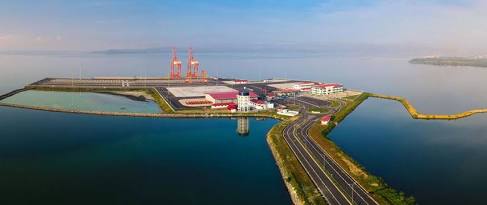
Sabah could attract more investment and create new business opportunities through a proposed BIMP-EAGA Special Economic Zone in Lahad Datu.
The proposal focuses on the Palm Oil Industrial Cluster (POIC) Lahad Datu. It aims to strengthen Sabah’s industrial sector and position the state as the “Eastern Gateway to Malaysia”.
Investment, Trade and Industry Minister Datuk Seri Johari Abdul Ghani has expressed support for the proposal. He also highlighted the need for closer cooperation between the Federal Government and the Sabah government.
The proposal was raised by Sabah Deputy Chief Minister III Datuk Ewon Benedick during the 2027 Budget debate in the Dewan Rakyat.
Turning Palm Oil into Higher-Value Products
Sabah has a strong palm oil industry. However, the state could gain more economic value by processing its resources into finished and higher-value products.
For example, POIC Lahad Datu could support palm oil refining, oleochemicals, biomass processing and biofuel production.
These industries could also create opportunities for local businesses. Companies in packaging, engineering, transport, storage and maintenance could support the growing industrial sector.
As a result, more economic value could remain in Sabah instead of leaving the state through raw commodity exports.
Connecting Sabah to Regional Markets
Lahad Datu’s location could also support trade with other parts of Southeast Asia.
The Brunei Darussalam-Indonesia-Malaysia-Philippines East ASEAN Growth Area (BIMP-EAGA) promotes economic cooperation among participating areas.
With suitable infrastructure and investment, POIC Lahad Datu could become a production and distribution base for regional markets.
Potential industries include food processing, halal manufacturing, warehousing and cold-chain logistics. However, businesses will also need reliable shipping services, competitive transport costs and efficient customs procedures.
Therefore, the proposed zone must address practical business needs, not just its geographical advantages.
Government Cooperation Is Key
The proposed zone will require close coordination between federal and state authorities.
The Sabah government can help facilitate land access, local infrastructure and investment promotion. Meanwhile, federal agencies play important roles in trade policy, taxation, customs and investment approvals.
Both governments would need a clear development plan. This should identify priority industries, infrastructure needs, investment targets and expected employment opportunities.
The plan should also complement other industrial parks in Sabah, including Kota Kinabalu Industrial Park and the Sipitang Oil and Gas Industrial Park.
Creating Jobs and Supporting Local Businesses
Investment alone will not guarantee benefits for local communities.
The proposed zone should create opportunities for Sabahans to gain skills and secure skilled jobs. These could include positions in manufacturing, engineering, logistics and industrial technology.
Local small and medium-sized enterprises (SMEs) should also have opportunities to supply goods and services to larger companies.
In addition, industrial development must include proper waste management, pollution controls and responsible use of natural resources. These measures can help protect Sabah’s environment while supporting long-term growth.
Next Steps for the Proposed Economic Zone
The proposal now requires detailed planning and further cooperation between the two levels of government.
Key steps include identifying suitable industries, assessing infrastructure requirements and developing a competitive investment framework. Authorities would also need clear targets for investment, exports and local employment.
If these plans are implemented effectively, the proposed BIMP-EAGA Special Economic Zone could help diversify Sabah’s economy and strengthen its role in regional trade.
However, its success will depend on practical implementation, reliable infrastructure and meaningful participation by local businesses and workers.
Source: Press KL | Rewritten By Minutesmy