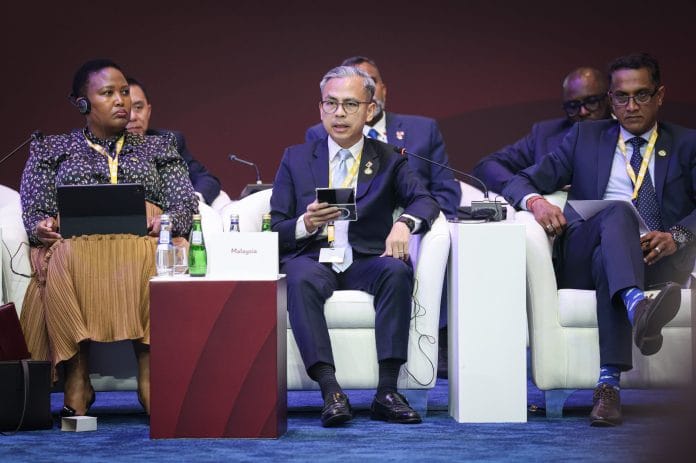
DOHA, Nov 9 – Malaysia is considering faster adoption of quantum-resistant security technology to protect national data against future cyber threats.
Communications Minister Datuk Seri Fahmi Fadzil said the government wants to strengthen cooperation between security agencies, telecommunications companies and industry players.
He has asked the Malaysian Communications and Multimedia Commission (MCMC) to discuss the initiative with the National Security Council (MKN) and the National Cyber Security Agency (NACSA).
The discussions will explore ways to establish a research and development (R&D) space. This facility could help Malaysia develop safer digital security systems and speed up its quantum migration plans.
Quantum Computers Could Challenge Current Security Systems
Fahmi highlighted the growing importance of quantum-safe communication during his visit to the Mobile World Congress (MWC) Doha 2026.
He said quantum computers could create major challenges for existing encryption technologies.
Encryption protects sensitive information by converting data into a coded format. It helps prevent unauthorised users from accessing private communications and digital records.
However, future quantum computers could potentially break some of the encryption methods that organisations currently use.
Therefore, countries need to prepare their digital infrastructure before these technologies become more widely available.
What Is Quantum Migration?
Quantum migration refers to upgrading existing digital security systems to use quantum-resistant encryption.
These newer methods aim to protect information against potential attacks from powerful quantum computers.
The transition will require organisations to review their current security systems and adopt stronger protection methods.
Fahmi believes quantum migration and quantum-safe communication will become important issues for countries in the coming years.
AI Technology Also Draws Malaysia’s Attention
Apart from quantum technology, Fahmi also explored other innovations during his visit to the MWC exhibition.
These included the use of artificial intelligence (AI) in smart city services and security systems.
AI could help improve public services, monitor urban infrastructure and support security operations.
Malaysia’s interest in these technologies reflects its efforts to strengthen digital capabilities while preparing for future cybersecurity challenges.
Ultimately, early preparation will help the country protect sensitive information and build a more resilient digital infrastructure.
Source : BERNAMA | Rewritten By Minutesmy