KUALA LUMPUR, Nov 2 – Malaysia needs more advanced cargo-scanning systems to improve the detection of prohibited goods at its airports, ports and other entry points.
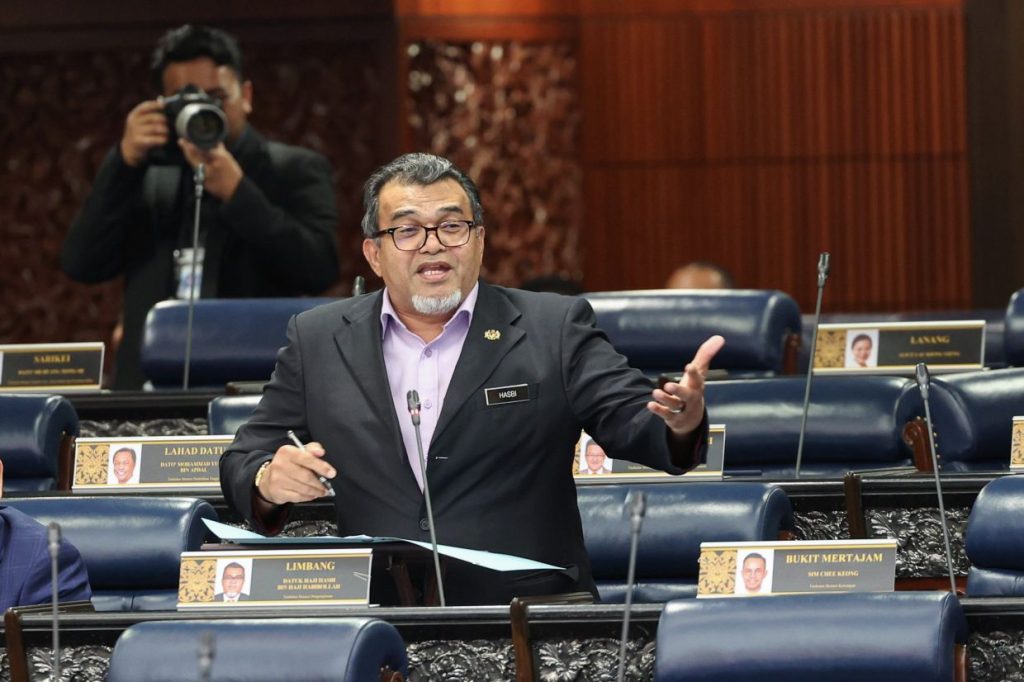
Deputy Transport Minister Datuk Hasbi Habibollah said the country should consider upgrading its existing equipment with technology that can identify substances at the molecular level.
He said advanced systems, including diffraction technology, could help officers distinguish between materials that look similar, such as drugs and milk powder.
Hasbi stressed that Malaysia must keep pace with rapid technological changes. He also pointed to other countries that use more advanced equipment to detect prohibited substances.
Cargo Scanning Systems Need Upgrading
Hasbi said Malaysia should invest in better scanning equipment to improve inspection accuracy.
He gave Australia as an example, noting that substances missed during inspections in Malaysia could be detected by authorities there.
He made the remarks during the question-and-answer session in the Dewan Rakyat on Monday.
Hasbi was responding to a supplementary question from Datuk Adnan Abu Hassan, the MP for Kuala Pilah.
Adnan had asked about the need to regularly update and test artificial intelligence (AI)-based cargo-scanning systems. He also raised questions about the role of inspection officers when scanning results differ from their own assessments.
AI Scanners Still Need Better Data
Hasbi said his visits to Malaysia Airlines cargo operations and Port Klang showed that AI scanning systems still needed improvement.
He highlighted data collection as one area that required attention to improve detection accuracy.
According to Hasbi, some airport scanning machines had collected around 15,000 and 8,000 data records respectively. However, the systems were still unable to identify certain objects accurately.
He said the technology alone could not guarantee effective inspections.
The experience and skills of inspection officers remained important, especially when scanners detected unusual or suspicious items.
In such cases, officers must review the results and carry out physical inspections when necessary.
132 Cargo Scanners Equipped with AI
Hasbi also provided an update on AI technology at Malaysia’s main entry points.
He said 132 out of 184 cargo and baggage scanning machines were equipped with AI-based technology.
AI can support inspections by analysing images and identifying objects. However, its performance depends on several factors.
These include the type of technology, system configuration, available data, algorithms and detection accuracy. The skills of security officers also remain essential.
Customs Functions Transferred to AKPS
Hasbi said the assets and inspection functions of the Customs Department were being transferred in stages to the Malaysian Border Control and Protection Agency (AKPS).
The transfer began on Oct 1, 2025, under the AKPS Act 2024 (Act 860).
The government is continuing the transition as part of efforts to strengthen border control and protection.
Hasbi’s remarks highlight the need to combine modern scanning technology with trained officers to improve the detection of prohibited goods entering the country.
Source : BERNAMA | Rewritten By Minutesmy