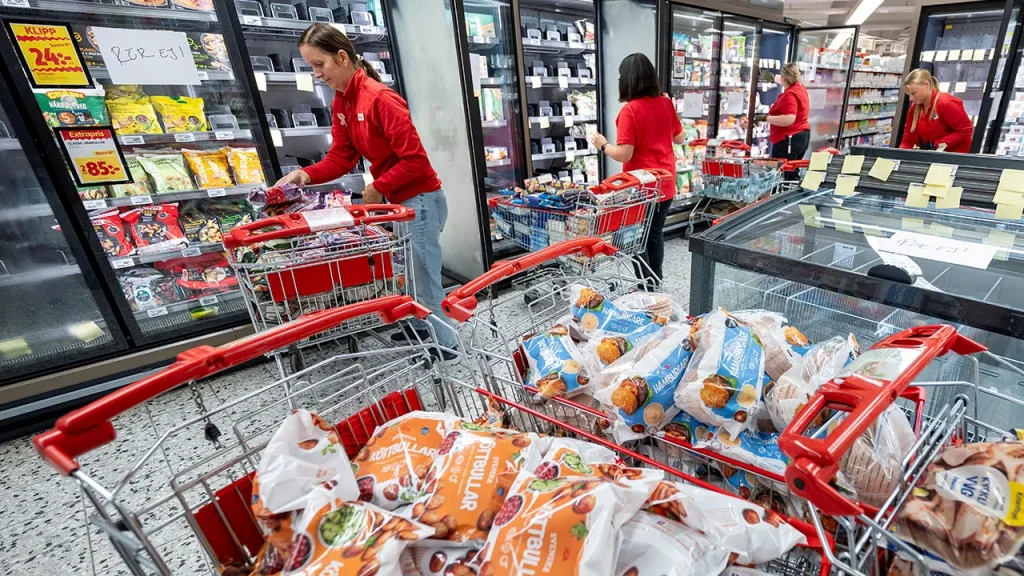
STOCKHOLM/BRUSSELS/LONDON, November 3 – Supermarkets across Europe have been hit by cyberattacks targeting their refrigeration systems, forcing retailers to discard food after fridges and freezers suddenly overheated.
The incidents affected supermarket operators in Sweden, Belgium, Luxembourg and Ireland. At least one IKEA store in Belgium was also affected.
The attacks caused temperatures in some freezers to rise as high as 50°C. As a result, retailers had to remove chilled and frozen products from sale to protect customers.
Major Supermarket Chains Affected
Several major retailers reported disruptions to their refrigeration systems.
These included Ahold Delhaize and Colruyt in Belgium and Luxembourg, as well as Swedish supermarket chains ICA and Coop.
In Sweden, an ICA franchise store in Stockholm discovered that its freezers had reached 50°C following an overnight cyberattack.
The incident reportedly began at around 2am. However, staff only discovered the problem several hours later.
Meanwhile, Belgian supermarket group Colruyt confirmed that five stores had experienced attacks on their refrigeration systems.
In Ireland, Musgrave reported that 13 SuperValu stores were affected. The company removed some chilled and frozen products from sale as a precaution.
Food Losses and Financial Damage
The attacks have caused significant food losses for affected businesses.
Belgian butcher Luc De Laet, owner of De Laet & Van Haver, said he discovered that his store’s refrigerators had reached temperatures of up to 18°C.
He estimated that the incident destroyed around €15,000 worth of meat, equivalent to approximately US$16,800.
Swedish retailers also reported damaged food stocks after their freezers stopped maintaining safe temperatures.
The incidents have raised concerns about the financial impact of cyberattacks on businesses that depend on refrigeration to protect food supplies.
Authorities Warn About Growing Cybersecurity Risks
No group has claimed responsibility for the latest attacks. Investigators have also been unable to confirm whether the incidents are connected to a similar attack in France last month.
That earlier incident reportedly affected hundreds of supermarkets. Hackers allegedly took control of cooling systems, causing fires and food losses.
Katrien Eggers, spokesperson for Belgium’s Centre for Cybersecurity, said the identity of the attackers might never be established.
She also warned that artificial intelligence (AI) could help sophisticated attackers exploit weaknesses in digital systems.
Many everyday devices, including refrigerators, heating systems, security cameras and alarms, can now be monitored or controlled remotely.
While this technology improves convenience, it can also create security risks when systems are not properly protected.
Cyberattacks Could Threaten Food Supply Chains
The European Commission has expressed concern about the wider impact of these incidents.
EU Agriculture Commissioner Christophe Hansen warned that repeated cyberattacks could disrupt food supply chains and weaken consumer confidence.
Cybersecurity researcher Tom Hegel of SentinelOne said retail businesses were attractive targets because they operate large networks of connected equipment.
These include refrigeration controllers, building management systems, security access panels and payment systems.
He also noted that identifying attackers could be difficult, especially when they gain access through exposed control systems.
Retailers Work to Restore Systems
Affected retailers have begun responding to the incidents and investigating the causes.
Danish technology company Danfoss, whose temperature-control equipment was used in some affected refrigeration units, said it was working with customers to implement fixes.
Meanwhile, retailers continue to assess the damage and restore normal operations.
The latest attacks highlight the growing importance of cybersecurity in everyday business operations. They also show how digital threats can affect essential services, food safety and consumer confidence.
Source : AWANI | Rewritten By Minutesmy