
Category :

MUKAH, June 19  -- A water hyacinth processing project that converts the invasive aquatic plant into organic fertiliser has created a new source of income for residents, particularly women, in Dalat district, said Sarawak Minister for Women, Childhood and Community Wellbeing Development Datuk Seri Fatimah Abdullah. She said women involved in the project not only work at the processing centre but also earn additional income by collecting water hyacinth from rivers and selling it to the facility as raw material. Fatimah said the project uses Black Soldier Fly (BSF) technology to recycle organic waste, including water hyacinth, into high-quality organic fertiliser and protein-rich animal feed. "This initiative transforms an invasive plant that was once a problem for riverine communities into an economic resource that benefits residents," she said at the launch of the Organic Fertiliser and Animal Feed Centre in Dalat near here today. She said 3,227 kilogrammes (kg) of water hyacinth had been collected this year for organic fertiliser production, with collectors receiving 40 sen per kg. The initiative not only helps clear rivers of the aggressively growing plant but also creates income opportunities for residents involved in its collection and processing, she said. Fatimah said the project had completed its first phase, which involved constructing a processing centre, procuring equipment, establishing initial stock and commencing operations in Kampung Kekan, Dalat. Earlier, she launched the processing centre, which also serves as a Black Soldier Fly breeding farm and was developed through a collaboration between the Sarawak state government and Petronas to support rural development efforts. She said the collected water hyacinth is used to produce biomass for breeding Black Soldier Fly larvae before the remaining plant matter is processed into organic fertiliser. A total of 804 kg of organic fertiliser was produced last year, generating RM2,400 in sales, while 676 kg had been produced so far this year, with sales reaching RM2,119, she said. Meanwhile, Petronas Sarawak general manager Norazibah Md Rabu said the Dalat community project reflected Petronas' commitment to supporting community wellbeing while advancing sustainable solutions to address local challenges. -- BERNAMA

Water Hyacinth Organic Fertiliser Project Generates New Income For Dalat Community

MUKAH, June 19 — A water hyacinth processing project that converts the invasive aquatic plant into organic fertiliser has created a new source of income for residents, particularly women, in .... read more
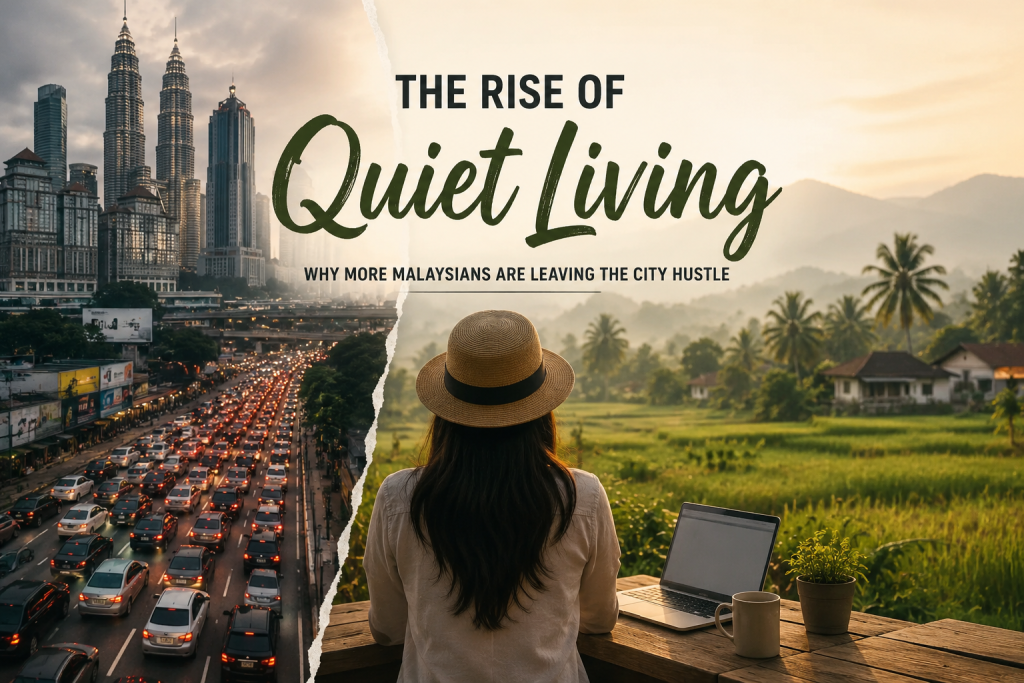
In recent years, a subtle but noticeable shift has been taking place across Malaysia. While Kuala Lumpur and Selangor remain the country’s economic engine, more Malaysians are beginning to question whether the fast-paced city lifestyle is still worth the rising cost, long commutes, and constant pressure that come with it. Instead, a growing number are choosing what many now call “quiet living” — a slower, more intentional lifestyle in smaller towns such as Kedah, Perlis, Melaka, and parts of Pahang and Negeri Sembilan. It is not necessarily about escaping the city, but about redefining what “a good life” means. From city lights to slower mornings For many young professionals, life in Kuala Lumpur once symbolised success. High-rise apartments, café culture, and career growth were part of the dream. But for some, that dream has started to feel increasingly expensive — both financially and emotionally. “I used to spend almost two hours just travelling to and from work,” said a 32-year-old marketing executive who recently moved from Petaling Jaya to Melaka. “Now I wake up later, I have breakfast with my family, and I actually feel like I have time to live.” This sentiment is becoming more common, especially among those who can work remotely or on hybrid arrangements. The COVID-19 pandemic accelerated this shift, but even after restrictions ended, the flexibility it introduced has remained. The cost of living reality One of the strongest drivers behind this movement is cost. Rent in KL and surrounding urban areas has steadily increased, while daily expenses — from parking to food delivery — continue to add pressure. In contrast, smaller towns offer a different equation. Housing is more affordable, traffic is lighter, and even simple routines feel less rushed. For many families, the decision is no longer just about income, but about quality of life.  A young couple who relocated to Alor Setar shared that their monthly expenses dropped significantly after leaving the Klang Valley. “We don’t feel squeezed every month anymore,” they said. “We can actually plan for the future instead of just surviving the present.” Remote work changing the map of opportunity The rise of remote and hybrid work has quietly reshaped where Malaysians can live. Jobs in digital marketing, IT, design, customer support, and freelance work no longer require a daily physical presence in the office. This has opened the door for a new kind of migration — not overseas, but inward, toward smaller Malaysian towns that were once seen as “backward” or “too quiet.” Now, places like Melaka, Taiping, and Kangar are seeing a different kind of resident: professionals with laptops, stable internet connections, and a desire for balance rather than constant acceleration. Mental health and the need to slow down Beyond money and logistics, mental health is becoming an increasingly important part of the conversation. City life, while exciting, can also be exhausting. Traffic congestion, noise, long working hours, and the pressure to constantly “keep up” have led many to experience burnout without even realising it. Psychologists have noted that prolonged stress in urban environments can lead to fatigue, anxiety, and emotional detachment. Quiet living, on the other hand, is often described by those who adopt it as “mentally lighter” — not because life becomes problem-free, but because the pace allows space to breathe. One resident who moved from Shah Alam to Perlis described it simply: “I didn’t realise how tired I was until I stopped rushing every day.” Not an escape, but a recalibration However, quiet living is not without trade-offs. Smaller towns may offer peace, but they can lack the career opportunities, entertainment options, and infrastructure found in major cities. For some industries, physical presence in urban centres is still essential. That is why many see this trend not as an escape from the city, but a recalibration of lifestyle priorities. Some choose to split their time between both worlds — working in the city during certain periods, and returning to quieter hometowns when possible. Others are redesigning their careers entirely to fit a more location-flexible life. The future: Malaysia’s new lifestyle balance As Malaysia continues to develop digitally and economically, the definition of success is slowly changing. It is no longer only about climbing corporate ladders in skyscrapers. For many, it is about waking up without stress, having time for family, and living in a space that feels manageable. The “quiet living” movement reflects a broader truth: Malaysians are not rejecting ambition — they are redefining it. And as more people begin to ask whether city hustle is worth the price, the answer is becoming less uniform. For some, Kuala Lumpur will always be home. For others, a quieter corner of Malaysia might be where life finally feels like life again. -- MINUTESMY / SUGAN BALAN

The Rise of ‘Quiet Living’ in Malaysia: Why More Malaysians Are Leaving the City Hustle

In recent years, a subtle but noticeable shift has been taking place across Malaysia. While Kuala Lumpur and Selangor remain the country’s economic engine, more Malaysians are beginning to question .... read more
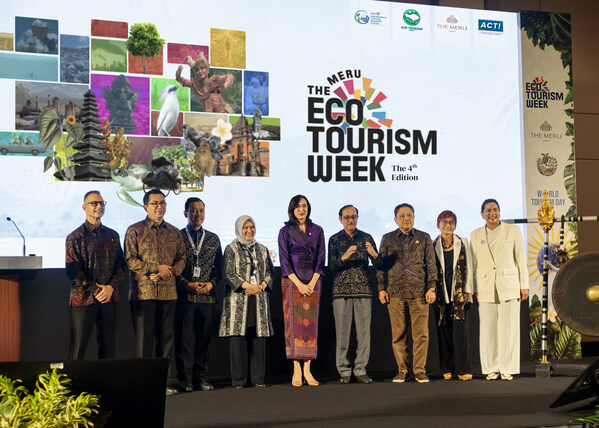
DENPASAR, Indonesia, June 18 -- Eco Tourism Bali, together with The Meru Sanur, the Wonderful Indonesia Sustainable Tourism Industry Forum (WI-STIF), and ACT! Project, in collaboration with Katadata and Katadata Green as official media partners, officially launched The Meru Eco Tourism Week 4th Edition at the Bali Beach Convention Center, Sanur, on May 30–31, 2026.  Carrying the theme "Tourism as a Force for Good: Regenerating Bali Together," the event serves as a collaborative platform that brings together tourism industry stakeholders, government representatives, academics, communities, media, and sustainable solution providers to collectively drive the transformation of Bali's tourism sector toward more responsible and regenerative practices. In its fourth year, Eco Tourism Bali places a stronger emphasis on nature-positive tourism, an approach that goes beyond reducing negative impacts by actively contributing to environmental regeneration, biodiversity conservation, and ecosystem sustainability. The event also coincides with the celebration of the International Day for Biological Diversity, observed annually on May 22, serving as an important reminder that the future of tourism is deeply connected to the health of nature and the environment. Amid Bali's growing environmental challenges, including waste management issues, climate change, ecosystem pressures, and threats to local culture, The Meru Eco Tourism Week 4th Edition aims to demonstrate that tourism should not merely benefit from nature, culture, and local communities, but also take responsibility for protecting, restoring, and regenerating the ecosystems that form the foundation of the industry. This regenerative approach is reflected across various aspects of tourism and hospitality, including: Business policies and governance Responsible hospitality operations Resource and waste management Biodiversity protection Sustainable sourcing practices Long-term commitments to environmental and community well-being Looking ahead, nature-positive and regenerative tourism will no longer be viewed as added value, but rather as an emerging necessity and new standard for the global tourism and hospitality industry. Over the course of two days, the event features a range of strategic programs, including: Press Conference with national and international media Panel Discussions, Presentations, and Fireside Chats featuring tourism and hospitality leaders, policymakers, sustainability practitioners, and environmental experts Eco Business Pitch sessions showcasing sustainable solution providers for the hospitality sector More than 40 exhibitors presenting innovative sustainability solutions for tourism and hospitality businesses The Eco Climate Badge Award 2025/2026, recognizing verified hotels and restaurants that have demonstrated excellence in sustainability and climate-friendly operations Cross-sector Networking Sessions designed to strengthen collaboration and accelerate implementation The Meru Eco Tourism Week 4th Edition is also honored to welcome Widiyanti Putri Wardhana, Minister of Tourism of the Republic of Indonesia, alongside support from various national and international stakeholders committed to strengthening Bali's position as a leading regenerative tourism destination. "We hope to see more tourism businesses embrace ESG principles and view sustainability as a long-term strategic investment. The government continues to implement concrete measures to promote sustainable tourism development across various destinations, including environmentally friendly infrastructure projects, destination revitalization programs, environmental restoration initiatives, and carrying-capacity assessments. We believe this forum can strengthen collective awareness of the importance of sustainable tourism and encourage all stakeholders to play a more active role in building cross-sector collaboration." — Widiyanti Putri Wardhana, Minister of Tourism of the Republic of Indonesia "We highly appreciate Eco Tourism Bali's consistent commitment to organizing Eco Tourism Week every year. Within the Ministry's long-term and medium-term development plans, Indonesia has identified ten priority tourism destinations and three regenerative tourism destinations, one of which is Bali. Strengthening sustainable tourism remains one of the key priorities of the Ministry of Tourism. Therefore, the government continues to develop policies, mechanisms, and support systems that encourage the practical implementation of sustainability across the tourism sector. We are confident that tourism businesses that adopt sustainability principles will increasingly become the preferred choice of global travelers." — Rizki Handayani Mustafa, Deputy for Industry and Investment, Ministry of Tourism of the Republic of Indonesia "Tourism can no longer operate through extractive models. The industry must evolve into a positive force that actively contributes to protecting and regenerating nature and surrounding ecosystems." — Rahmi Fajar Harini, Co-Founder, Eco Tourism Bali "Sustainability is no longer an optional addition within the tourism industry. It has become a fundamental pillar in maintaining Bali's competitiveness and securing its future as a world-class destination." — Suzy Hutomo, Co-Founder, Eco Tourism Bali "Hosting The Meru Eco Tourism Week reflects our ongoing commitment to supporting and advancing sustainable and regenerative tourism in Bali. This commitment is reinforced through our continued collaboration with Eco Tourism Bali, a partner that shares our vision of a tourism industry that not only generates economic value, but also protects, restores, and enriches the natural environment, cultural heritage, and local communities that make Bali unique. Located within The Sanur Special Economic Zone for Health & Wellness, this integrated tourism ecosystem demonstrates how innovative healthcare facilities, biodiversity, holistic wellness, community well-being, cultural preservation, and economic growth can coexist to create long-term value while supporting the future of Indonesia's tourism industry through sustainable and responsible development. Through The Meru Eco Tourism Week, we believe this event can inspire meaningful ideas and accelerate collective action toward a more sustainable and regenerative future for Bali and Indonesia." — Ed Brea, General Manager, The Meru Sanur Through this platform, Eco Tourism Bali hopes that The Meru Eco Tourism Week 4th Edition will serve not only as a forum for discussion, but also as a catalyst for meaningful collaboration capable of delivering long-term solutions and impact for Bali's future. United by a shared vision, Eco Tourism Bali and The Meru Sanur believe that Bali's future tourism success depends on growing alongside nature, rather than at its expense. Through collective action across industries, Bali can advance a tourism model that not only drives economic growth, but also preserves the environment, empowers local communities, and safeguards its rich cultural heritage for generations to come. About The Meru Sanur: Nestled along the tranquil coastline of Sanur, Bali, The Meru Sanur is an all-suite beachfront resort thoughtfully designed to blend seamlessly with the lush tropical gardens, Indonesian traditions, and authentic Balinese culture. Complementing the experience, the resort offers diverse gastronomic journeys ranging from authentic Indonesian specialties to international cuisine, alongside wellness and spa offerings rooted in Balinese healing traditions and local wisdom. The resort also features a non-digital kids club, a state-of-the-art fitness center, two expansive swimming pools, and world-class wedding and event venues. As part of InJourney Hospitality's luxury collection, The Meru Sanur is seamlessly connected to the iconic Bali Beach Hotel The Heritage Collection, and Bali Beach Convention Center, all situated within 'The Sanur', Indonesia's first Special Economic Zone dedicated to health and wellness, making it one of the largest premier health and wellness destinations in South East Asia. For more information, visit website www.themerusanur.com About Eco Tourism Bali Eco Tourism Bali is a platform committed to advancing sustainable and regenerative tourism practices in Bali through cross-sector collaboration, sustainability verification, capacity-building initiatives, and environmental and social programs such as the Eco Climate Badge and the Regenerative Bali Program. For more information, visit website www.ecotourismbali.com -- PRNewswire -- Source: The Meru Sanur

The Meru Eco Tourism Week 4th Edition “Tourism as a Force for Good: Regenerating Bali Together”

DENPASAR, Indonesia, June 18 — Eco Tourism Bali, together with The Meru Sanur, the Wonderful Indonesia Sustainable Tourism Industry Forum (WI-STIF), and ACT! Project, in collaboration with Katadata and Katadata .... read more

As international travel continues to recover, many Malaysians are turning their attention closer to home and discovering that some of the country's most memorable experiences can be found within its own borders. From pristine islands and ancient rainforests to heritage towns rich with culture, Malaysia offers a diverse range of destinations that cater to every type of traveller. Increasingly, local tourists are seeking authentic experiences, choosing nature retreats, eco-tourism adventures and cultural explorations over crowded commercial attractions. One destination gaining popularity is Langkawi, where visitors can enjoy breathtaking views from the Sky Bridge, relax on white sandy beaches and experience world-class hospitality. Meanwhile, the Perhentian Islands continue to attract travellers looking for crystal-clear waters, vibrant coral reefs and a slower pace of life. For those interested in history and culture, George Town and Melaka remain among the country's most treasured destinations. Their colourful streets, colonial architecture and renowned food scenes provide visitors with a unique glimpse into Malaysia's multicultural heritage. Nature lovers are also spoilt for choice. Taman Negara, one of the world's oldest tropical rainforests, offers jungle trekking, canopy walks and wildlife encounters. In Sabah, Mount Kinabalu continues to inspire adventurers with its stunning landscapes and challenging summit climb. Tourism experts note that domestic travel is becoming increasingly popular due to affordability, improved infrastructure and a growing appreciation for local experiences. Social media has also played a significant role in highlighting lesser-known destinations that were once overlooked. As Malaysia continues to promote sustainable tourism, travellers are encouraged to explore responsibly, support local communities and preserve the natural beauty that makes the country a unique destination. Whether it is a weekend road trip, an island escape or a cultural journey through historic towns, Malaysia remains a treasure trove of experiences waiting to be rediscovered. -- MINUTESMY / SUGAN BALAN

Malaysia’s Hidden Wonders: Rediscovering the Beauty of Domestic Travel in 2026

As international travel continues to recover, many Malaysians are turning their attention closer to home and discovering that some of the country’s most memorable experiences can be found within its .... read more

As the cost of living continues to shape household spending decisions, more Malaysians are rediscovering a simple yet effective way to save money while maintaining a healthy lifestyle — cooking at home. From young professionals living in urban apartments to families managing monthly budgets, home cooking has become more than just a practical necessity. It is increasingly seen as a lifestyle choice that promotes financial discipline, healthier eating habits and stronger family connections. A Return to the Home Kitchen In recent years, food delivery apps and dining out became an integral part of modern Malaysian life. Convenience often outweighed cost considerations, especially for busy working adults. However, as household expenses rise, many consumers are taking a closer look at their daily spending habits. A meal purchased outside can easily cost between RM15 and RM25 per person, while the same meal prepared at home may cost significantly less. For families with children, the savings become even more substantial. Preparing meals at home allows households to control both their budget and food quality, making every ringgit go further. Smart Shopping, Smarter Spending Home cooking begins long before ingredients reach the kitchen. Budget-conscious Malaysians are becoming more strategic shoppers by comparing prices, purchasing seasonal produce and planning meals around weekly promotions. Wet markets remain popular for fresh vegetables, fish and poultry, while supermarkets offer competitive discounts on pantry essentials. Many households are also embracing meal planning, creating weekly menus to avoid unnecessary purchases and reduce food waste. By buying only what is needed, families can maximise value while minimising spoilage. Simple ingredients such as eggs, tofu, vegetables, rice and local fish continue to form the foundation of affordable and nutritious meals. Traditional Recipes Make a Comeback Interestingly, the trend towards home cooking is also contributing to the revival of traditional Malaysian recipes. Dishes such as nasi goreng kampung, sambal telur, sayur lemak, ikan kembung bakar and chicken curry are finding their way back onto dining tables. These meals are not only economical but also deeply connected to Malaysia's rich culinary heritage. Many younger Malaysians are learning recipes from parents and grandparents, ensuring that family traditions are preserved while adapting them to modern lifestyles. Social media platforms have further accelerated this movement, with countless creators sharing affordable meal ideas, cooking tutorials and budget-friendly recipes tailored to local tastes. Health Benefits Beyond Savings While financial considerations may drive the decision to cook at home, the health benefits are equally significant. Home-cooked meals generally contain less sugar, salt and unhealthy fats compared to many commercially prepared foods. Families can choose fresher ingredients, control portion sizes and incorporate more vegetables into their diets. Nutrition experts have long emphasised that healthy eating does not necessarily require expensive ingredients. Balanced meals can be prepared using affordable local produce and traditional cooking methods. As awareness of wellness and preventive healthcare grows, home cooking is becoming an important component of a healthier lifestyle. Strengthening Family Bonds Beyond economics and nutrition, home cooking offers something that money cannot buy — quality time. For many families, preparing and sharing meals together creates opportunities for conversation, learning and bonding. Children can participate in simple cooking tasks, while family recipes become a way of passing knowledge from one generation to the next. In an increasingly digital world, the dinner table remains one of the few places where families can slow down and reconnect. More Than Just Saving Money The growing popularity of home cooking reflects a broader shift in how Malaysians define a good quality of life. Living well on a tight budget is not merely about cutting expenses. It is about making thoughtful choices that support financial stability, personal wellbeing and family relationships. As Malaysians navigate economic challenges, many are discovering that some of life's greatest comforts do not come from expensive restaurants or trendy food deliveries. Sometimes, they come from a simple home-cooked meal shared with loved ones around the dining table. In a time when every ringgit counts, home cooking is proving that living well does not have to mean spending more. Instead, it is becoming a powerful reminder that good food, good health and strong family connections can all begin at home. -- MINUTESMY / SUGAN BALAN

Every Ringgit Counts: Why More Malaysians Are Returning to Home Cooking

As the cost of living continues to shape household spending decisions, more Malaysians are rediscovering a simple yet effective way to save money while maintaining a healthy lifestyle — cooking .... read more
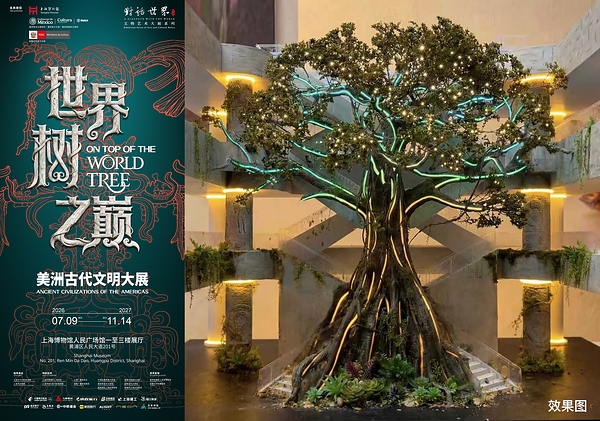
SHANGHAI, June 15 -- The Shanghai Museum will present "On Top of the World Tree: Ancient Civilizations of the Americas" (July 9, 2026 – Nov. 14, 2027 at the Shanghai Museum on People's Square), a major exhibition exploring the artistic, cultural, and spiritual traditions of ancient civilizations across Central and South America. Following the success of 'On Top of the Pyramid,' this exhibition features exceptional objects from Mexico and Peru, showcasing the ancient Americas' greatest achievements. Organized in partnership with museums and cultural institutions in Mexico and Peru, the exhibition features 1,129 groups of objects, nearly 3,000 pieces. Through an expansive presentation of archaeological and artistic material, it examines the development of ancient civilizations across Central and South America and their enduring cultural legacies.    Occupying more than 7,000 square meters of gallery space, the exhibition is organized into two complementary sections focused on the histories, artistic traditions, and material cultures of Mexico and Peru. The first section, "Sacred Spaces: Civilizations of Ancient Mexico". Examining the relationship between belief systems, political authority, and artistic production, the presentation explores the cosmological frameworks that shaped ancient Mesoamerican societies. Through monumental works, ritual objects, and everyday artifacts, visitors are introduced to the intellectual and cultural worlds of these civilizations. The second section, "Machu Picchu and the Golden Empires of Peru". As the largest exhibition on Andean civilizations ever presented in China, it is also among the most significant international touring exhibitions of Peruvian gold and silver artifacts. Tracing the development of societies across the Andes, the exhibition highlights the region's artistic achievements while examining the social, political, and spiritual systems that shaped its civilizations. During the exhibition period, the Shanghai Museum on People's Square will be dedicated exclusively to the presentation. Inspired by the symbolic concept of the World Tree, exhibition design throughout the museum incorporates visual references drawn from the ancient Americas, including maize, jaguars, feathered serpents, and pyramids. To create an authentic ancient American ambiance, the venue becomes a 10,000 square meters immersive space, where visitors enter through a cornfield directly into the ancient landscape. Interpretive installations before the galleries introduce ancient America's landscapes, beliefs, and traditions. Starting June 1, 2026, international visitors can buy timed-entry tickets on Trip.com (ID required) or on-site at the Shanghai Museum on People's Square. -- PRNewswire -- Source: The Shanghai Museum

The Shanghai Museum to Present “On Top of the World Tree: Ancient Civilizations of the Americas”

SHANGHAI, June 15 — The Shanghai Museum will present “On Top of the World Tree: Ancient Civilizations of the Americas” (July 9, 2026 – Nov. 14, 2027 at the Shanghai .... read more

BANGKOK, Jun 15 -- Tourism Malaysia welcomes the announcement by the Civil Aviation Authority of Thailand (CAAT) on the introduction of a new direct flight route between Bangkok and Kuching which is expected to be a catalyst for the growth of the Malaysian and Thai tourism sectors. Tourism Malaysia director in Bangkok Nurul Ain Mohammed Yunus said the route would not only strengthen regional connectivity, but was also expected to stimulate the growth of the tourism industry in Sarawak and Sabah.   He said if the service begins operating as scheduled this October, it has the potential to increase tourist arrivals and boost tourism-related economic activities in both countries. "Tourism Malaysia welcomes AirBorneo's initiative to operate this new route as Kuching is one of the destinations that is being actively promoted to the Thai market." "Although Kuching is still less well-known among Thai tourists compared to Kuala Lumpur, Penang and Johor Bahru, continuous promotional efforts have succeeded in creating new demand and strengthening existing interest in this destination, especially due to its unique cultural heritage and nature-based attractions," he told Bernama when contacted today. The Bangkok-Kuching service is also expected to expand access for Thai tourists to Sarawak in conjunction with Visit Malaysia Year 2026 (TMM2026), thus opening up wider opportunities to explore Borneo's diverse cultures, ecotourism products and UNESCO-recognized heritage sites. Last week, CAAT announced the results of discussions regarding flight schedule revisions, increased service capacity and the opening of new routes to Thailand during the 158th International Air Transport Association (IATA) Slots Conference (SC158) in Bangkok. According to CAAT, AirBorneo is among four new airlines that have received airport slot allocations to operate services between Kuching International Airport and Suvarnabhumi Airport, Bangkok. AirBorneo is expected to operate 14 flights per week on the Kuching–Suvarnabhumi route throughout the 2026/2027 winter schedule, which runs from 25 Oct 2026 to 27 March 2027. According to CAAT, other airlines that have also received new slot allocations for the season are Riyadh Air from Saudi Arabia, Virgin Atlantic from the United Kingdom and SkyUp Nistru from Moldova which will operate charter flight services. -- BERNAMA

New Bangkok-Kuching route boosts tourism in Malaysia and Thailand

BANGKOK, Jun 15 — Tourism Malaysia welcomes the announcement by the Civil Aviation Authority of Thailand (CAAT) on the introduction of a new direct flight route between Bangkok and Kuching .... read more

SEOUL, South Korea, June 15 -- International fans traveling to South Korea for K-pop concerts and other live performances can now use a ticket resale service designed to make transactions safer and more convenient. Ticketbay, a South Korean ticket resale marketplace, launched its global service recently and is providing escrow-based transactions and multilingual support for users around the world.     Many of Korea's major ticketing platforms rely on domestic identity verification systems, creating significant barriers for international fans seeking access to official ticket purchasing channels. As a result, overseas fans have often relied on transactions conducted through social media platforms. These transactions can expose buyers to risks such as tickets not being delivered after payment, or counterfeit or duplicate tickets that may result in denied entry at venues. Ticketbay's global service was designed to address these concerns through a more secure transaction structure. At the core of the platform is an escrow-based payment system. Ticketbay holds the buyer's payment until the ticket has been successfully delivered and the purchase has been confirmed, releasing the funds to the seller only after the transaction is completed. This structure helps prevent common risks associated with informal social media transactions, including sellers disappearing after receiving advance payment or delivering invalid tickets. The platform offers additional safeguards beyond escrow protection. If a performance is officially canceled, customers receive a full refund of the purchase amount. Ticketbay also offers an optional paid protection service that provides reimbursement if a customer is denied entry at the venue despite presenting a ticket purchased through the platform. For international visitors who often travel to Korea specifically to attend performances, including purchasing airline tickets and arranging accommodations, this serves as an additional layer of protection and peace of mind. The service also offers greater payment accessibility for international users. In addition to credit cards, customers can make payments through PayPal, WeChat Pay, and Alipay, allowing them to use familiar payment methods without the need for separate currency exchange procedures. Customer support is available in English, Japanese, and Chinese, while ticket delivery options include both international shipping and local pickup in Seoul. Within a month of launch, Ticketbay's global service recorded approximately 70,000 site visits and attracted more than 2,000 new registrations from users across 69 countries, with the largest numbers coming from Japan, China, the United States, Indonesia, and Singapore. "As more international fans travel to Korea for K-pop concerts and live events, demand is growing for a trusted platform where fans can buy and sell tickets safely regardless of language or location," Ticketbay said. "By combining escrow-based transaction protection, multilingual support, and convenient international payment options, we aim to improve access to K-pop concerts and Korean live performances for fans around the world." Ticketbay's global service is available at www.ticketbayglobal.com. -- PRNewswire -- Source: Ticketbay

Ticketbay Expands Safer Access to K-pop Concert Tickets for Global Fans

SEOUL, South Korea, June 15 — International fans traveling to South Korea for K-pop concerts and other live performances can now use a ticket resale service designed to make transactions .... read more
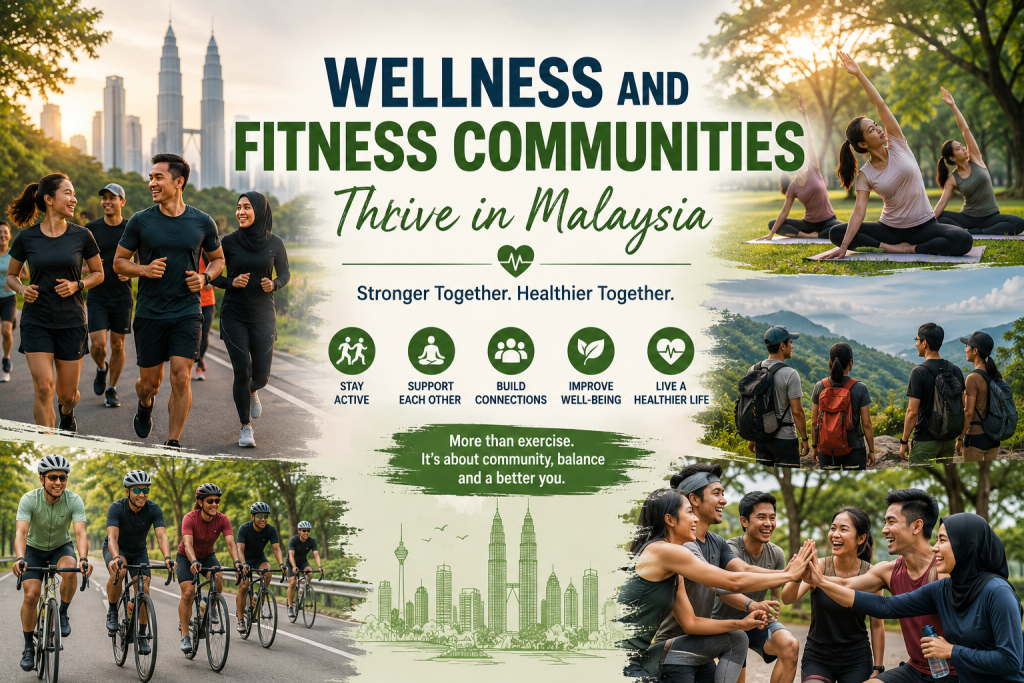
On a typical Saturday morning, while much of the city is still waking up, dozens of Malaysians are already lacing up their running shoes, rolling out yoga mats or gathering for a cycling session with friends. What brings them together is not competition or the pursuit of athletic excellence. Instead, many are searching for something much simpler — a healthier lifestyle, a supportive community and a break from the pressures of everyday life. Across Malaysia, wellness and fitness communities are growing rapidly, attracting people from all walks of life. Whether it is a neighbourhood running club, a weekend hiking group or a community yoga class at a public park, these gatherings are becoming an important part of how Malaysians stay active and connected. For 29-year-old marketing executive Sarah Lim, joining a running club last year was initially about improving her fitness. What she did not expect was the sense of belonging she would find. "I thought I was signing up to exercise," she says. "But I ended up making friends who encourage me not just during runs, but in life as well." Sarah's experience is becoming increasingly common. As work schedules become more demanding and digital interactions replace face-to-face connections, many Malaysians are turning to wellness communities to fill a social gap. Unlike traditional gyms, where workouts can often feel solitary, community-based fitness activities offer a shared experience. Conversations happen between stretches, friendships are formed during long walks and support is readily available when motivation begins to fade. The appeal extends beyond physical health. Mental wellness has become a growing priority for many Malaysians, particularly among younger adults navigating fast-paced careers and rising daily pressures. Activities such as yoga, meditation and nature hikes are gaining popularity as people seek healthier ways to manage stress. For some, simply spending time outdoors and being present with others can have a powerful impact. "It's not about running the fastest or climbing the highest mountain," says outdoor enthusiast Amirul Hakim, who regularly participates in hiking groups around the Klang Valley. "It's about disconnecting from work for a few hours and reconnecting with yourself." Social media has also played a role in fueling the movement. Platforms such as Instagram and TikTok are filled with local fitness communities sharing their activities, inspiring others to join and making wellness feel more accessible. Yet many participants believe the real value lies beyond the photos and fitness trackers. What keeps people returning week after week is the human connection. At a time when loneliness and burnout have become increasingly common topics of conversation, wellness communities offer something many people may not realise they need: a support system. The beauty of the trend is that it does not require expensive memberships or specialised equipment. A comfortable pair of shoes, a willingness to show up and an open mind are often enough. As more Malaysians embrace active lifestyles, wellness is gradually becoming less about appearance and more about overall well-being. The focus is shifting from achieving a perfect body to building healthier habits, stronger relationships and greater balance in everyday life. In many ways, the rise of wellness communities reflects a broader cultural change. Malaysians are beginning to recognise that health is not only measured by physical strength or fitness levels, but also by the quality of their connections, their mental well-being and their sense of purpose. And perhaps that is why, every weekend, more people are choosing to gather in parks, trails and community spaces across the country. They may arrive as strangers, but many leave feeling healthier, happier and a little less alone. -- MINUTESMY / SUGAN BALAN

More Than Exercise: How Wellness Communities Are Helping Malaysians Find Connection and Balance

On a typical Saturday morning, while much of the city is still waking up, dozens of Malaysians are already lacing up their running shoes, rolling out yoga mats or gathering .... read more

KUALA LUMPUR, 5 JUNE 2026 – Deeply rooted in Malaysian food culture, coconut has long been a staple ingredient enjoyed across generations, from traditional kuih and desserts to savoury dishes and refreshing beverages. This June, Luckin Coffee Malaysia is bringing tropical indulgence to Malaysians with the launch of its all-new Triple Coconut Latte, an upgraded version of its bestselling Coconut Latte. The launch coincides with the global 5th anniversary celebration of Luckin Coffee’s best seller, Coconut Latte, as well as its milestone of over 2 billion cups sold worldwide. In conjunction with the celebration, Luckin is officially declaring June as “Coconut Month” for Malaysia, a month-long campaign themed “Make It All Coconut”, dedicated to celebrating coconut culture through creative coconut beverages, irresistible collectibles, and exclusive promotions. Through Coconut Month, Luckin Coffee Malaysia aims to modernise and elevate these familiar flavours into a new-age coffee experience designed to match Malaysians’ lifestyles. Beyond flavour innovation, Luckin Coffee continues to prioritise ingredient quality and sourcing consistency. Early in March 2025, Luckin owned and operated a coconut island supply base in Banggi Island, Indonesia, supporting fresher coconut sourcing while strengthening its Southeast Asian connection through regional craftsmanship and production. Upgraded Experience of Coconut Latte Throughout June Launched on 6 June 2026, the new Triple Coconut Latte is crafted for coconut lovers seeking a richer and creamier experience. Featuring a triple-layered coconut profile in one sip with coconut cream topping, coconut milk sourced from Southeast Asia, and coconut milk jelly. Balanced with Luckin Coffee’s award-winning IIAC coffee profile, the beverage delivers a smooth, tropical taste with a bold, aromatic finish. Responding to overwhelming popular demand from our Malaysian fans, Luckin Coffee Malaysia is excited to bring back two refreshing favourites on 19 June: the Iced Minty Coconut Latte and the Iced Minty Chocolate Frappe. These returning classics offer an extra-cooling, indulgent treat perfectly suited for Malaysia’s tropical climate. "Make It All Coconut" With More Surprises To elevate the celebration, Luckin Coffee is also introducing a line of exclusive merchandise and special offers that are easy to grab. ● Coconut Latte Pendant (Launched on 4 June): A mini cup Coconut Latte pendant for fans to collect at RM 17.90 with the purchase of 2 cups of coconut series beverages. ● Coconut Plushie (Launching on 19 June): Designed in two colours: green coconut and old coconut. These adorable plushies can be purchased at RM 22.90 with the purchase of 2 coconut series drinks. ● B1F1 Coconut Deal via Grab (4–18 June): Enjoy an exclusive Buy 1 Free 1 offer on Grab for any coconut drinks from 4 to 18 June. For more information about Luckin Coffee, please stay tuned to Luckin Coffee Malaysia’s official Facebook, Instagram, TikTok, and XiaoHongShu social media channels or visit the Luckin Coffee app. About Luckin Coffee Malaysia Luckin Coffee Malaysia is part of the global Luckin Coffee brand, a leading retail coffee company that pioneered technology-driven retail network to provide coffee and other products of high quality, high convenience and high affordability to customers. Proudly operated by Global Aroma Sdn Bhd, a subsidiary of Hextar Industries Berhad, Luckin Coffee Malaysia is committed to its vision of building a world-class coffee brand and becoming part of everyday life in Malaysia. Founded in 2017, Luckin Coffee is headquartered in China. For more information, please visit www.luckincoffee.com -- MINUTESMY

LUCKIN COFFEE MALAYSIA CELEBRATES COCONUT MONTH IN JUNE WITH THE LAUNCH OF TRIPLE COCONUT LATTE

KUALA LUMPUR, 5 JUNE 2026 – Deeply rooted in Malaysian food culture, coconut has long been a staple ingredient enjoyed across generations, from traditional kuih and desserts to savoury dishes .... read more